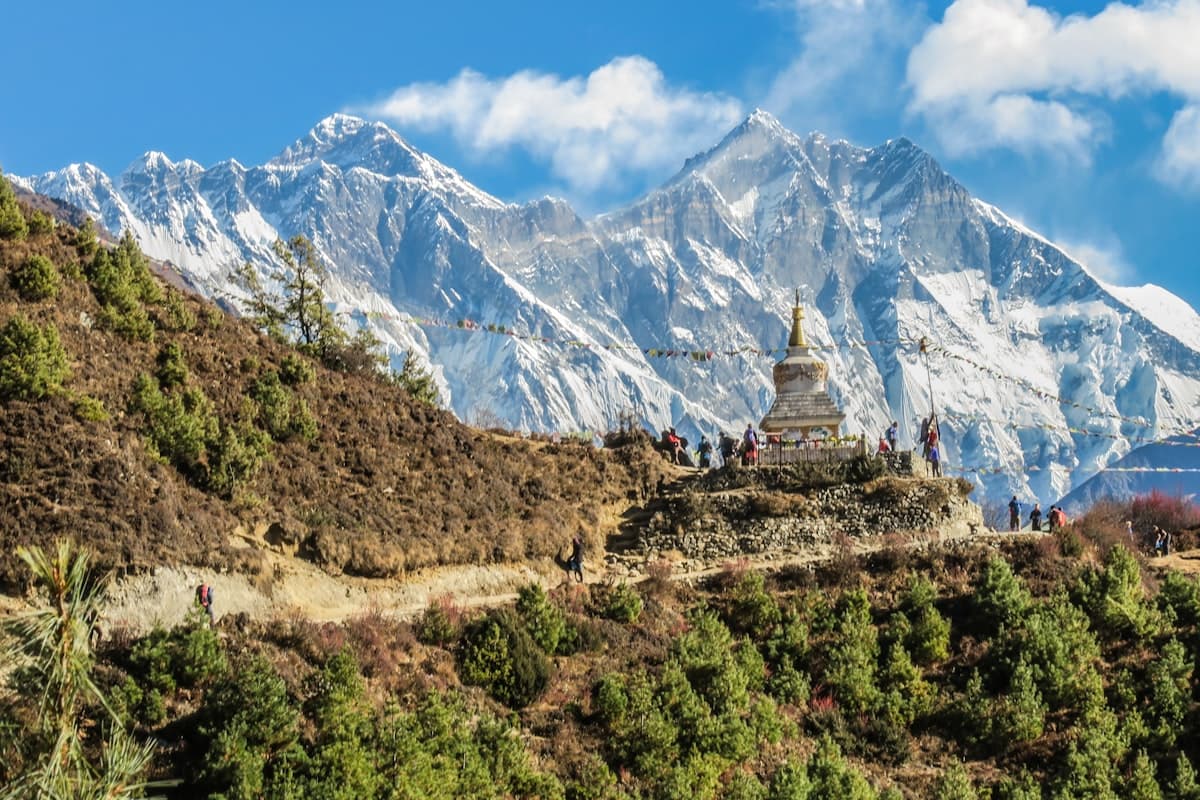
Sagarmatha National Park
A UNESCO World Heritage Site encompassing Mount Everest and surrounding peaks, glaciers, and Sherpa villages in the Khumbu region.
Altitude
8,849m
Best Seasons
spring, autumn
Duration
10–16 days
Entry Fee
NPR 3000 / USD 30
Nearest City
Namche Bazaar
Location
Solukhumbu, Koshi
Sagarmatha National Park is a UNESCO World Heritage Site that protects 1,148 square kilometers of dramatic mountain wilderness in northeastern Nepal. The park encompasses the upper catchment of the Dudh Kosi river system and includes the world's highest peak, Mount Everest (Sagarmatha, 8,849m), along with other iconic summits like Lhotse, Cho Oyu, and Ama Dablam.
Inscribed as a World Heritage Site in 1979 for its outstanding natural value, the park ranges from 2,845m to the summit of Everest. The lower elevations are covered in birch, juniper, and rhododendron forests that give way to alpine scrub, glaciers, and permanent snow above 5,000m.
The park is home to rare wildlife including the snow leopard, Himalayan black bear, red panda, and the Himalayan monal (Nepal's national bird). The Sherpa people, who have lived in harmony with this harsh environment for centuries, add rich cultural significance to the natural landscape.
The park's main entry point is Lukla, reached by a short flight from Kathmandu. The trail to Everest Base Camp passes through the park, visiting Sherpa villages like Namche Bazaar, Tengboche (home to the famous monastery), and Dingboche. The Sagarmatha Pollution Control Committee works to preserve the fragile mountain environment against the impacts of tourism.